31 July 2018

DisneyNow

This post was originally written for a scholarship application under a different name.

The final crystals melted from his dead gaze, and the mouse looked over its maker. The room, which had been lit by harsh red lights, shifted to a dim blue glow while those on the other side of the walls watched closely. Soft ultraviolet lights rose, brightly illuminating the many glow-in-the-dark Buzz Lightyear figurines on the desk in the corner. The man’s spiritless eyes blinked for the first time in half a century. A muffled thudding could be heard beyond the insulated walls as celebration began. Another low pulse of equal force emerged from the man’s chest. Then, his ears detected an electric buzz as the table on which he lay rolled itself out from the tube.

“As you said, Walt, ‘If you can dream it, you can do it.’”

Before him towered a woman in a Mickey Mouse suit, though it was not her voice he heard. A speaker lodged deep in the throat of the costume’s smiling mouth brought forth Mickey’s cold voice. His eyes glowed white in the black light. Walt Disney shook, and meant to shout but found his breaths shallow and his voice weak.

“It’ll take a while to acclimate to the new lungs, but they’ll last centuries longer than the ones you mucked up. You’ll be back at it in no time, but let’s start with something easy. Just follow the teleprompter.”

The mechanical gurney wheeled Walt Disney in front of the shining-green plastic spacemen and sat him up slowly. A blinding light suddenly beat into his face. He squinted and in a low voice muttered, “DisneyNow is the app for watching your favorite Disney movies and shows…”

25 March 2018

Big Wraps

In my job, I make wraps that people can order via an app. There's no limit to how much shit you can put on a wrap, and the vegetables are free. So some folks think they're smart.

Jesus Christ, could you pause for one goddamn minute to consider whether this is physically possible? Is that so hard? These are 12'' wraps. What the fuck are you doing ordering double spinach, romaine, iceberg, banana peppers, pickles, green peppers, onions, cucumbers, tomatoes, and more? How do you suppose that works? Do you think you're gaming the system? Because you don't have to pay for the veggies? Bet you're feeling smart when your wrap is just a 5000 calorie "salad" on a fucking burrito wrap. How are you going to eat that? By the time it's wrapped up, the thing is wider than my calves. I'd tell you to stick it up your ass, but I doubt that's physically possible.

Maybe the vegetable extravaganza is a form of self-trickery. Don't make yourself think this is healthy. You and I both know you put a double order of fried chicken and bacon at the bottom of this wrap. I don't judge what you put on your food. I'll put olive oil, vinegar, and extra mayo in your wrap if that's what you want (which is uncomfortably common), but when I'm through my third burrito wrap trying to get around your pile of free leaves without tearing it, I start to wonder about you.

Then I reach the bottom of the ticket. From here we're in the clear. It's just spices and shit now, easy. Except, at the end of every monster wrap with a ticket that hangs from the ceiling to the goddamn floor, at the very bottom of the order it says the most dreaded phrase.

Add fries to your wrap - 1.15

How? HOW? How.

You're clearly hungry. I get it. But you can't eat this. First of all, it is barely staying together. I've barely managed to get one end of the wrap to touch the other. Second, you could never fit this shit in your mouth. Not possible. Or if it is, I want to see it. Why not just get two human-sized wraps? It's more expensive, but hey, it's fucking edible!

I judge you people.

31 December 2017

A Standard of Civility for Speakers on Campus

This post was originally written for an assignment under a different name.

Free speech and debate are vital to society. The ability to make truth claims of one’s own and dispute others’ enables people to together to find the truth. But some people hold views which have been widely discredited, are rooted in lies and deception, and can bring about real harm to people. I will consider this issue through the example of a Holocaust denier being invited onto a campus, and I will conclude that, given a few things, he should be allowed to speak. I will consider reasons to not permit him to speak outside of his views, and I will consider reasons to not permit to speak on account of his views through two different perspectives. I will argue that it is not appropriate to bar him for speaking on account of his views. I will briefly consider what can be done about objectionable views in an academic space.

The first reason someone might refuse platform to the speaker is that he is unfit for free debate for reasons beyond his beliefs. Free debate necessitates a space with a degree of civility, and absolute safety. The reason I say that free debate requires a degree of civility, rather than total civility, is that civility is very subjective and depends a great deal on the beliefs of the individual. Even if people are operating under the same model of civility, they may disagree about whether something is civil due to other beliefs. For example, someone could find the speaker to be uncivil solely by virtue of his beliefs. It is also possible that someone’s beliefs will directly lead her to act in a way which is considered uncivil. For example, there are people who refuse to use the singular “they” pronoun for people who identify as non-binary because they believe that perpetuating the idea of spectral gender is harmful to the fabric of society. By refusing to refer to someone the way they prefer, this could be called an incivility, but it is important to note that this is a type of incivility which stems directly and necessarily from one’s beliefs.

I do not mean to say that it is inappropriate to refuse platform to people because they are known for committing either of these types of incivilities, nor am I saying that it is morally acceptable to commit these kinds of incivilities—I will consider these cases later. I merely want to distinguish unnecessary incivility from necessary incivility. By “necessary,” in this case, I am referring to a situation in which an incivility is necessary to having, expressing, and arguing for a position. It is also possible that necessary incivilities are not actually incivilities at all, but I will not make this claim in the course of this post.

Unnecessary incivility is different. It is important to note that unnecessary incivility can stem from a person’s beliefs; it just isn’t necessary for expressing and arguing for them. For example, if someone believed that vest-wearing is harmful to society, she may be inclined to go into public and yell obscenities at anyone wearing a vest. This is obviously quite uncivil, and it stems from her beliefs, but it is not a necessary incivility because it is not necessary to her beliefs or the expression of her beliefs. Someone can also be known to be uncivil for reasons outside of the beliefs in question. Someone could just be a very rude person.

A debate marked by these kinds of incivilities is unhealthy. Debate and discourse are inherently civilized activities. As a debate becomes more characterized by shouting, harassment, and insults, it becomes less a debate, and more an altercation. To encourage good debate and healthy discourse as opposed to a possibly entertaining, but ultimately empty, charade masquerading as academics, it is reasonable for academia to prohibit people who are known for being unnecessarily uncivil from speaking under the veil of academic discussion. That does not mean that this should be enforced with no wiggle room. Not all incivilities are equally destructive to debate, nor do all of them cleanly fall into either of the two categories. It is not appropriate to use this reasoning as a form of censorship or to enforce rules in a non-evenhanded manner.

It is up to the university to determine whether a person’s unnecessary incivilities should prevent them from speaking in an academic environment. Some may choose to ignore unnecessary incivilities entirely to circumvent allowing one’s bias from influencing who is given the opportunity to speak, but I do not see a reason for this type of preventative behavior to be considered mandatory. I do think that it is likely necessary for the university to publish their standards for speakers and create a system where they are held accountable for any bias in order to communicate a respect for free speech and ensure that it is not throttled. If the speaker is known for giving turning campus speaking opportunities into trolling sessions and streams of insults rather than spend his time making real arguments for why he does not believe that the Holocaust occurred, it is reasonable to bar him from speaking on campus.

In contrast to debate’s requirement for civility, debate’s requirement for safety is much more absolute. If the speaker is known to incite violence or make direct threats, he should not be allowed to speak. By “inciting violence,” I am not referring to a person whose events are characterized by violence. If the speaker has not directly encouraged violence against people, he is not to blame if others become violent when he speaks, whether the violent people agree with him or if they disagree with him. In this case, I am referring to direct calls to violence or direct encouragement of violence. For instance, consider again the case of the woman who hates vests. If she speaks about the harms of accepting the wearing of vests in society, and her supporters separately attack the school’s elite vest club and set fire to all of their vests, she is not to blame, even if her words led to the burning taking place. But if she called for the raid, she would be responsible for the act of violence, even if she only did so subtly. For instance, if she said, “I hear there is a club of vest wearers here. It would be great if they got burned somehow,” she would likely be responsible. It is also important that “necessary violence” if you will is just as unacceptable as “unnecessary violence.” Even if the act of violence, threat of violence, or instigation of violence is necessary to make one’s argument, it cannot be accepted because open debate cannot survive where it exists. People who engage in this kind of action have no place in academia.

But if the issue that is taken with the speaker is rooted in their beliefs, is it acceptable for the university to deplatform the speaker? I don’t think so. I will consider two possible arguments for not allowing the speaker to speak on campus based on their beliefs alone: the argument from the limits of civility and the consequentialist argument. These arguments are not mutually exclusive, but they represent two ways of looking at speech.

As explained earlier, civility is very important to debate. When using this idea earlier, I considered good debate to be the goal, and I rejected unnecessary incivilities because I found them to be destructive to this goal. However, the argument from the limits of civility will take a more nuanced view of what the goal is. I will base these ideas off of Cheshire Calhoun’s essay “The Virtue of Civility,” in which she creates an account of civility as a virtue which must be held in balance with other kinds of virtues. I do not mean to claim that Calhoun would make or agree with the argument from the limits of civility, but I will use a derivative of her model to consider the matter.

Calhoun puts value in being civil with ideas one disagrees with and acknowledges that this is an important part of a healthy society, but she does not believe that the goal is always open debate. She creates an outline for what she calls “the limits of civility.” She holds that while we should be willing to hold civil debate and discussion with those with whom we vehemently disagree, there are limits to what we should be expected to respond to in a civil manner. She finds that these limits are rooted in the standards of society. She says that even if a view is very wrong, it should still be responded to civilly if there is no public consensus on the matter—this kind of civil discussion is necessary to show that the very wrong view is very wrong—but she claims that this is not the case if the view is already widely discredited and there is a public consensus that the view is very wrong. In this case, she claims that a civil response is not owed.

For the sake of this particular argument, I will not take a civil response to necessarily include a handshake, a smile, and a warm welcome. Instead, I will create a minimalist account for a civil response consisting of respecting one another’s right to speak and be heard, a willingness to consider and respect the ideas of one another, and not resorting to destructive incivilities, such as insults. While I acknowledge that the mere act of showing a cold shoulder may be uncivil, I am not considering rejecting it to be a part of the necessary civil response because it does not represent a grave hindrance to successful debate. This may not be what Calhoun considers a civil response, but I will use this model for the argument from the limits of civility. I will also make a connection which Calhoun does not directly make: that the reason a civil response is not owed in this kind of case is that presenting the arguments constitutes an incivility in itself because it makes no new points and is harmful or non-inclusive to a set of people. This would be a necessary incivility because it is necessary to argue for the view.

From these ideas, the argument from the limits of civility would go something like this: 1. Uncivil actions are not owed civil responses. 2. Making arguments which are clearly false, socially unacceptable with an overwhelming consensus that the ideas are incorrect, consist of arguments which have been discredited, and are exclusionary, dismissing of fact, or harmful constitutes a form of incivility. 3. Making these kinds of arguments is not owed a civil response. 4. It is very clear that the Holocaust happened. 5. There is a huge consensus that the Holocaust happened. 6. The arguments of the speaker have been fully discredited. 7. The speaker’s views are dismissing of fact and possibly harmful to various groups. 8. Therefore, the speaker is not owed a civil response from the university, meaning that it is acceptable to not allow him to speak.

This argument may seem sound, but there are historical examples which reveal its problems. Consider the case of the imprisonment of Galileo Galilei. Galileo claimed that the Sun was the center of the universe, rather than the Earth. Geocentrism was the dominant philosophy at the time. Modern understanding shows that neither view is absolutely correct, but Galileo was closer to the truth than his contemporaries. At the time, it seemed very clear that the Earth was the center of the universe, there was a huge consensus that the Earth was the center of the Universe, so Galileo’s arguments seemed to have been discredited. Galileo’s views were seen as deeply harmful. Was Galileo owed a civil response? The church did not seem to think so. They showed him extreme incivility, imprisoning him for life for his views. I do not mean to imply that those who employ the argument from the bounds of civility in my scenario wish to imprison the speaker, nor that the argument from the bounds of civility necessitates that imprisonment is an appropriate uncivil response when no civil response is owed. Consider that the argument from the bounds of civility would certainly allow all kinds of other incivilities against Galileo, including ones which would silence him, which we would consider to be very bad in retrospect. I only mean to point out that it can be very bad to show destructive incivility to people who argue for widely discredited views one disagrees with.

The problem with the argument is twofold. First, Premise 2 refers to necessary incivilities. As I mentioned before, it is questionable whether necessary incivilities are incivilities at all. This idea is difficult to demonstrate, and I will not attempt to do so here, but the same kind of issue can be shown without making this claim. If, in the appropriate space of debate, someone commits only the absolutely necessary incivilities, they are trying very hard to be civil. The purpose of civility in debate is to serve the free sharing of ideas toward the finding of the truth. It would be overstepping the purpose of civility in a debate to prioritize civility over sharing one’s true ideas. By avoiding unnecessary incivility, this person is showing that she values civility, but not above the free sharing of ideas, which is what debate is for. The second issue is that it is impossible to know with absolute certainty that a view is truly incorrect even if the common thought of the time is entirely oriented against it.

I also don’t mean to say that there are no bounds of civility whatsoever. If someone acts with unnecessary incivility to someone else, they are not owed a civil response, obviously, but there are also bounds to civility regarding speech. I think that a good model of the bounds of civility should account for setting. People are not obligated to live in constant debate. If the vest-hating woman approaches someone wearing a vest in a supermarket and claims that vests are just worthless shirts because they don’t have sleeves, the vest-wearer is under no obligation to explain that the sole useful feature of the shirt is not the sleeves and that there is value to covering the torso without covering the arms, even if the woman explains her views very nicely. It would be acceptable for the vest wearer to respond with a degree of incivility. Few would take issue if he told her to go away. At the dinner table, there are also bounds of civility. If the vest-hating woman spots her nephew taking up vest-wearing, it may not be appropriate for him to say, “Go away,” but it would be appropriate for he and the rest of the family to intentionally ignore her descriptions of the dangers of vests. But we must be able to have these conversations somewhere. Academia strives to be that place of open debate. If this woman cannot express her opinions in an academic environment or other safe space for debate and discussion which she was invited to, she is being silenced everywhere.

The consequentialist argument is simpler. In the case of the speaker, it would point out the following: 1. The purpose of debate is to collectively move toward the truth. 2. A claim must be new or based in fact or good philosophical thought to be useful in moving toward the truth. 3. The speaker is almost certainly not making any new claims or claims based in fact or good philosophical thought. 4. In all likelihood, letting the speaker speak will not be useful in moving toward the truth, the purpose of having debate to begin with. 5. It is likely that letting the speaker on campus could cause harm, such as violence or discrimination. 6. Letting the speaker speak would probably have a net negative result. 7. It is reasonable to not allow him to speak.

Quite a lot of this is reasonable. The first six points could be useful in deciding whether inviting someone to speak is useful or a good idea. I think that it is a problem, however, for universities to use this kind of logic to restrict speech. Point 7, the conclusion, does not follow. Though it may be likely that allowing the speaker to speak is worthless at best, this kind of evaluation does not warrant action form a controlling force such as the university. Upholding free speech does not mean only protecting speech one thinks is useful, but protecting speech which might not be. If we accept this argument, an authority could consider any sort of speech to be useless and ultimately harmful because the argument does not work with objective certainty; it works in probabilities. For these reasons, it does not seem acceptable to ban the speaker on these grounds.

What does this mean for the university hosting the speaker? Assuming that he is not a danger nor unacceptably unnecessarily uncivil, is there anything a university can do? First, it is not totally inappropriate for the university to have an opinion—particularly on matters with the degree of certainty that comes with stating that the Holocaust did in fact occur. Also, the university does not have to pretend they like the speaker. This is the distinction I was referring to when I gave a minimalist account of a civil response. While there should be civil acceptance, there need not be other kinds of acceptance. Beyond direct response, the university can take action to ensure that a safe and civil environment is maintained by monitoring the event and creating spaces for protest. The speech of the speaker should not come at the expense of the speech of his opponents. Students can protest, or if they find the speaker to be worthless, completely ignore him. He isn’t saying anything meaningful, so why give him attention? It is the responsibility of academia to be a space of debate and discussion, even of views which are objectionable. By providing a space for these debates, we can remind ourselves of the reasons we do not accept such ideas—because they are rooted in misinformation and bad arguments—rather than succumbing to dogmatic rejections of objectionable views.

24 December 2017

Nate the Wonder Dog

An engineer was working on a project to create a man-made floating island. He had been part of this project from its inception, and during its long development, he had risen in influence becoming one of the lead engineers on the project. During all this time, he had met his beautiful wife and had become the father of a wonderful child named Tommy. He loved his family very much, but his identity was in this project. He would see it through, unlike those before him. After a decade and a half of sweating every detail, building working models, and constructing the base of the island, the time had come to set sail on the floating city, the largest man-made vehicle in history. He was one of the first people to move onto the island, in the developed area near the center. He would visit home from time to time, but overall he trusted his wife with the task of raising his son.  He thought about backing out, but in his mind it was too late. He only hoped he could keep his family together.

He could not. He came home to divorce papers. He could hardly blame her for leaving but was nevertheless angry over how she so clearly desired to hurt him. She took much of his wealth and was never seen again. This left the engineer with a dilemma: he was more invested than ever in the project, but he had a son to raise. His colleagues encouraged him to take a smaller role on the team and move off the island, but he could not do it. He would be on the island when it was finished. Tommy, his son, would join him on the island. Anyway, he'd be done with his part in the relatively near future, so there was no reason in his mind to give up his position. This did Tommy no favors. He had gotten to that age where he'd started to make distinct friends, his first network, and he was torn away from that. The people on the island were sympathetic to his predicament, but there was little they could do to help. They were adult engineers. Tommy had little interest in their activities. They also did their best to keep him safe.

In the center of the island, there was a valve used to regulate water flow through the center of the island. There was a pool in the center, which was the recreational hub of the entire island. It also served another purpose. To reduce turbulence during storms among other things, water could be allowed to fill a central pool. Because they were not using it recreationally, and they were not in turbulent waters (they remained somewhat close to land for the construction), the pool remained empty, making it a simple matter to walk up to this valve. When the island was to be finished, the valve would be operated by a computerized system, but at this point it was operated by a large, red lever to be operated only by professionals.

The adults told Tommy the same thing over and over: “Don't touch that lever. Don't touch the lever, or you could sink the island. Don't even think about touching that red lever.” They would tell him in the middle of recreation or fun. He felt like the grown-ups cared a lot more about the island than about him. He grew disinterested in their company and resentful of his father. Instead of humoring them, he became an imaginative boy and lived in his own thoughts most of the time. His father sensed his son's resentment toward him, and it broke his heart. He thought quite a lot about leaving the island, but it seemed too late now. He was here to stay. That being said, outside of leaving, he would do anything to please his kid.

Everything changed when Tommy came home one day. He ran into their suburban home and shouted, “Daddy! I met a friend today! I met a friend, and his name is Nate.” His father asked if he could meet this Nate. “He's in the garage,” his son said nonchalantly.

To the engineer's great surprise, in his garage was a wild-looking dog. It was a mutt so thoroughly interbred, one could not decipher the breeds at play. It moved its head erratically. It was lean about the belly. It had no tags or labels. Tommy must have named it. It looked like a street dog. The engineer was taken aback by this because there were no animals allowed on the island. “How the heck did you get here?” he said to Nate. Nate foamed at the mouth a little. The dog appeared sickly. A contagious illness could do very bad things on an isolated ship. He knew he ought to shoot the dog before it was too late. But that was impossible. His son had taken such an instant liking to it. It already had a name. He couldn't remember ever seeing Tommy this happy. He could hardly remember ever seeing Tommy happy at all. A supply ship would be there in five days. They could take Nate back to land. He told Tommy he had five days with Nate before he had to go away. He also told Tommy that the dog must stay in the garage and not be touched and that Tommy was to wash his hands if he were to break the second rule.

Nate's puzzling appearance lit up Tommy's well-trained imagination. He figured that the only way Nate could have come to this water-borne limbo was by flying through the air like Superman. Nate must have known that he needed a friend and flown through the sky to lift his spirits. Nate coughed up foam. Tommy was very grateful. Nate the Wonder Dog. He was the smartest dog in the whole world. He could fly from place to place. His barks could tear through walls. He helped kids and stopped criminals. He was immune to both bullets and loneliness. Nate rolled over. Tommy relayed this fantasy to his father over and over again. It was killing his father inside. The dog appeared more and more sickly. He wouldn't kill it now. It was too late. Throughout his life, the engineer had always felt he was too late. He regretted never having done what he had to.

The night before the beast was to go away, the engineer awoke to noise coming from the garage. He leaped out of bed. Tommy was in the garage. His son explained that an enclosed area like a garage was no place for a flying dog. They were to go exploring together before they were forced apart. But the moment he had a path, Nate bolted from the garage, running mad. He bolted at an ungodly speed toward the dried-up pool. Toward the red water-control lever. The engineer knew what he had to do. He ran upstairs and grabbed the shotgun. Tommy followed. “What are you doing? That's my friend!” he screamed.

“He's going for the valve. He could sink the island.” The engineer set his sights on the dog, approaching the red switch with no sign of diverting or slowing down.

“He's not gonna hit the lever, Dad!” Tommy was in a total panic.

“I have to be sure. I thought you said he was bulletproof.”

“I don't know!”

He'd said the wrong thing. He'd have to live with that. At this moment there was one thing left to do. One thing he had to do before it was too late. The dog was only about ten feet away now. The engineer took in a fluttery breath and squeezed the trigger. He whispered to himself,

“Better Nate than lever.”

28 November 2017

Moral Sainthood

This post was originally written for an assignment under a different name.

In her essay “Moral Saints,” Susan Wolf claims that moral sainthood is unattractive and a bad ideal because moral virtue does not cover all the things we value in a person. Moral sainthood, according to Wolf, would lead to dehumanization and less happiness in the world. Other aspects outside of conventional morality are worth striving for.

I disagree with every point Susan Wolf makes. She describes moral sainthood in a way that is totally baffling to me. She defines moral sainthood as striving to be as morally good as possible, far beyond moral obligation. She somehow describes this as a life of impersonal, meaningless altruism. She bases this description off of what she calls conventional morality or conventional moral values. However, her description does not line up with my understanding of anyone’s moral values. While philanthropy and direct service are certainly morally good and admirable, many other things are plainly morally good, but Wolf insists on calling them non-moral. Creating meaningful art, building social bridges, building physical bridges, improving oneself, learning skills to help others or to make their lives more meaningful, and so many other non-philanthropic things are truly morally good. I don’t think it is very controversial or contrarian to say these things are morally good.

She describes the moral saint as being unable to take up any personal pursuits because he would be too busy doing something philanthropic. I would not trust Wolf with my finances. That’s like saying I should not put money toward paying my mortgage because I need to put all my money toward my car loan, beyond the minimum payment. Why can’t a moral saint invest time in the future to try to do as much good as possible? She claims that the only way a moral saint can cultivate skills she is passionate about is to only become a moral saint after gaining these skills. The saint could then use her skills in order to do moral good. Hopefully I’m not the only person who thinks this is utter nonsense. Why can’t the saint invest in the future with the hope to do good.

Susan Wolf also describes human motivations in a very poor way. She neglects the idea that a person can have multiple legitimate reasons for doing something. Regarding my previous point, the moral saint can pursue learning a skill or art because she is passionate about it and wants to use it to do good in the world. She takes this failure farther when considering the Utilitarian moral saint. She draws a distinction between someone wanting to paint because they find meaning in it and the Utilitarian moral saint who might pursue painting in order to increase the general happiness. Why can’t the Utilitarian moral saint hold both motivations? The saint can both find fulfillment and bring happiness to himself and others through his work.

15 November 2016

Journey through the Cave

This post was originally written for an assignment under a different name.

All who ever lived lived in a long cave,
Whose far away light was sought by the brave.
Though small, the light could not be extinguished,
So men set off for it and relinquished
All comfort and loved ones and things mild.
And nestled in this cavern was a child
Whose heroes had run bravely to the glow
And lead way for others so they may go.
Upon starting, men had to go farther yet,
Still thoughtless of what they wanted to get.

“Mom, Dad, why don’t you go on for glory?”
“We have a son. We’re telling your story.
We’ll reach the end whether we crawl or bound,
But no one has ever turned back around.
Later, you will see where the poets wailed
And where toward the light the brave sailors sailed,
Where knights against monsters gallantly fought
But these things shouldn’t be too eagerly sought.
You are still young, and the journey is long
Savor your youth lest you miss its sweet song.”

The child did know he would get there sometime,
But he would not see those heroes sublime
Nor could he to their company enlist,
For then they would be far into the mist,
And when commoners would arrive in waves
They would see only monuments and graves
From those who live in adventure and joy—
At least, that’s how it seemed to this one boy.

So that very night, the boy packed his case
And ran off quick, unsure what he would face
The way toward glory is the way toward light,
So he gave all his thought and all his might.
While it seemed he’d make the trip handedly,    
He gave little thought to his family.
He loved them—they had done him well and kind—
It seemed it was right to leave them behind.
Why did his parents want him so wary?
But he knew not for what he did tarry.
But as he walked—why even as he charged—
The orb at the end seemed not to enlarge.
This alone would have caused him to despair,
But he saw his heroes, laden with wear.
Crazy-eyed they ran in futility;
It seemed they had lost their ability
To lust for the thing, to feel anymore;
Their hearts were heavy and their feet were sore;
They would not go meet him, as had dreamt he,
Rather they pressed on in small bands, hearts empty.

He knew it was treason against his brave swear,
But he’d romanticized his travel there
And wanted to turn his course back around
To his loved ones and to be safe and sound.
So he followed his route back to its source
But he found a five-pronged fork in the course.
He’d made way with ease for the light’s wan shine
But his home was harder for him to find.
So he took the path second from the right,
But yet another branch was soon in sight.

Then he turned back around to that fire lit;
Toiled on, saddened, then melted into it.

The meaning of this tale should be quite clear:
Do not race life running from year to year—
Especially youth, which should be cherished
By ev’ry man until he should perish—
Lest searching you miss what there is to find
And for nothing leave those you love behind.

25 March 2016

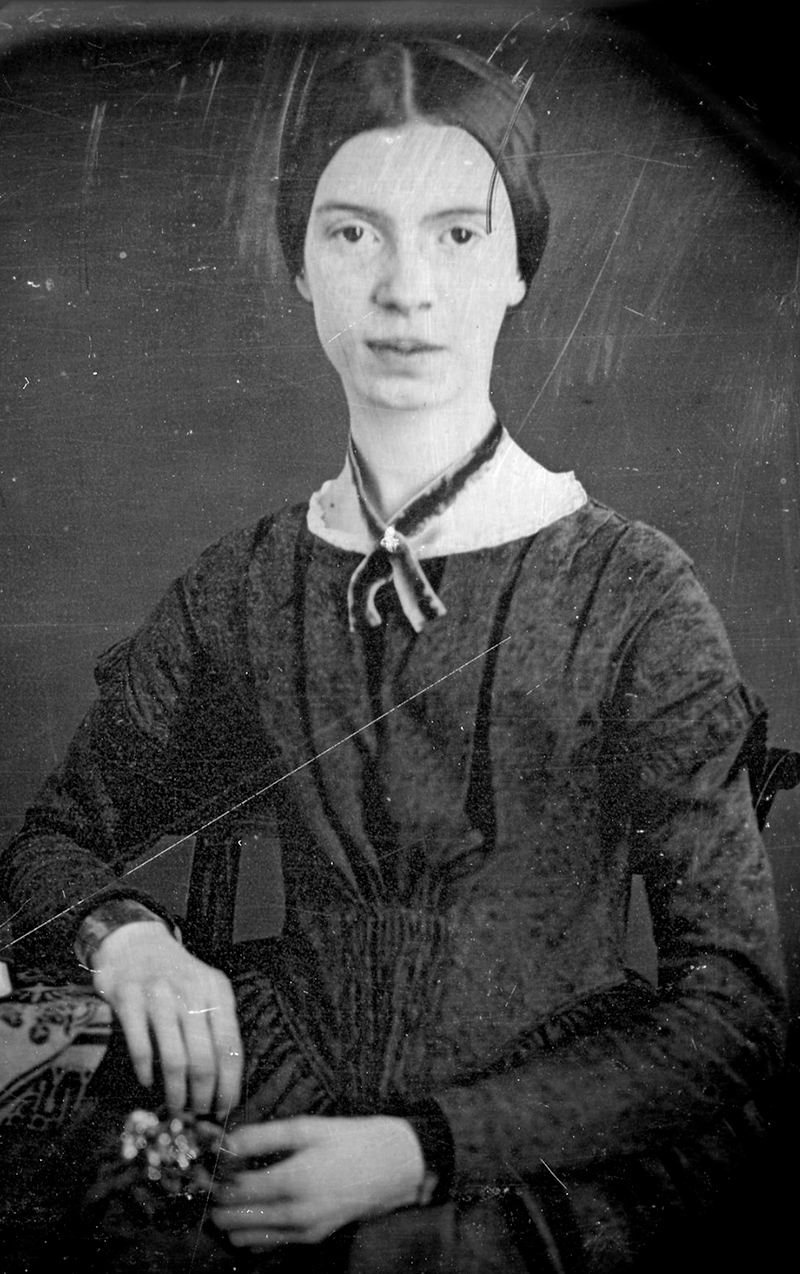
Emily Dickinson

Image result for emily dickinson
This post was originally written for an assignment under a different name.

Above her deep thought, attention to detail, and capacity for metaphorical complexity, Emily Dickinson is remembered for the way she changed poetry. The monument of Dickinson’s art is revealed when juxtaposed with that of her poetic contemporaries. While Emerson, Thoreau, and Whitman, for example, strove to proclaim a point directly to the American people, Dickinson was comfortable to dance on a question and to communicate to the reader not through doctrine or pre-constructed method but, rather, directly through her soul. Though her poetry had few readers in her lifetime, she seemed to believe that it would be read eventually (“This is my letter to the world, / That never wrote to me,—”). This reveals an important question: for whom or what was she writing? What was her poetic purpose? Dickinson’s poetry is fundamentally distinct because of its self-sufficiency and its revolutionary goal, to consider the human soul before its surroundings.

The broad things which influenced Dickinson can be counted on one’s fingers. Her contained life, however, could not contain her spirit, rather it concentrated it: her attention to detail is unmatchable (“He [the snake] likes a Boggy Acre / A floor to cool for corn—”). It follows that her poetry would in turn be brief, rich, and complete. Literary critic Alfred Kazin asserts that her poetry was her life in “Emily Dickinson: The Alone to the Alone.” While many other poets of her time, revolutionary in their own right, had tangible purposes, Dickinson projected her soul onto the soul of the world and that of its inhabitants. Therefore, a thoughtful analyst could understand Dickinson as a person with little more than her poetry as a reference. This is a rare and powerful attribute. Her soul is accessible in its entirety through her poetry.

This insight is critical to determine her purpose. She, as an artist, was driven to put herself on the page. As a person of little influence and big ideas (and so clearly terrified by the end of life), it is very reasonable that she sought to don herself immortality, if she had not ordered her sister to burn her poetry after her death.1 Thus, by elimination, her purpose must have come from pure self-expression, a necessary psychological application. In a personal interview, Cheryl McIntosh, an expert on Dickinson’s poetry, said, “Don’t lose the forest for the trees, she [Dickinson] had to write because she was an artist.” This seems logical, but it was not a universally accepted idea. As transcendentalists locked horns with more traditional thinkers—Whitman declaring the likes of, “There was never any more inception than there is now”—poetry became ever more integrated with philosophy and theology. But Dickinson functioned in her vacuum, where she could distill her soul and her life. Instead of constructing new ideas out of the world, Dickinson desired to deconstruct it, to liquefy it, to boil it down to its essence.

McIntosh identified a specific poem which highlights Dickinson’s fears, and thus suggests her goals as a poet: “I died for beauty.” In this poem, the speaker is buried next to a man who died for truth, and the speaker says that she died for beauty, but failed. This reveals Dickinson’s longing to describe beauty which correlates with but does not equal truth. In the poem, she considers herself and her grave-mate kin. Truth was not unimportant to Dickinson, but it was not the fundamental goal of her art. Rather, she focused on beauty: the beauty of nature, the beauty of the human soul, the beauty of the inevitable. Kazin notes that as opposed to Dickinson “Hawthorne, Emerson, and Stowe had at least this in common: each had a belief consistent with itself.” While many of her contemporaries were trying to stir the pot at the time, Emily Dickinson tried to stir the mind—all the time.

On account of this difference, Dickinson’s content was fresh, and, to an extent, predicted some of modern thought. Because she wanted to stir the mind, not feed it, she never concluded with an absolutism; she preferred to explore the questions. Kazin wrote, “The power of attention is for Dickinson a truer, more spontaneous way of thinking than having ‘ideas’ … Other people had faith absolute, she had mind.” McIntosh said, “Most poets were concerned with combining traditional methods with theological truth. Dickinson was much more willing to grapple with life’s contradictions. She anticipated a more realistic view of life. She … understood modern angst.” Helen Vendler suggests in “Dickinson the Writer,” that Dickinson indirectly addressed her poetry’s ambiguous nature in the quote “Deal with the soul / As with Algebra!” in that the reader could apply his own variables.

In this respect, Dickinson was a master of mirroring her work to more traditional work. For instance, all of her poems can be sung to the tune of Amazing Grace. She often opened her poems with sweeping statements (e.g. “Renunciation—is a piercing Virtue—”). But the poems in whose trajectories seem most clear are those which are the most surprising:2
Renunciation—is a piercing Virtue—

Against itself—
Itself to justify
Unto itself—
When larger function—
Make that appear—
Smaller—that Covered Vision—Here—
In a time of great cultural change, she was caught in the middle. She, in full, admonished nothing, absorbed everything, and brought it all together. In our interview, Cheryl McIntosh highlighted this memorable dichotomy: “She [Dickinson] was not a full-blown transcendentalist, but she was very interested by their [the transcendentalists’] ideas … but she never completely gave up on God either.” When the controversies of the day became irrelevant, so did writing which focused solely on them, but Dickinson focused on the grand themes behind them and has remained relevant.

Emily Dickinson wrote “because she was an artist.” She had no grand political or social motive, a great distinction from other radical thinkers in the mid to late nineteenth century (McIntosh). She herself described her purpose as beauty. Even with her limited experience outside of the Homestead, she felt surrounded by beauty: she says in #466 that she can collect “Paradise” by “spreading wide…[her] hands.”3 She consumed the world around her, and the size of that world prompted her to look closer. Dickinson was not the classifier of the atmosphere; she was the “inebriate of air.” She did not write for people—she wanted her work burned—but for the world itself (“This is my letter to the world / That never wrote to me”). 

She writes in #598 the following:
The Brain is just the weight of God—
For—Heft them—Pound for Pound—
And they will differ—if they do—
As Syllable from Sound.
Here the brain is said to equal God in weight but not in format. God is in nature; he is “sound”; he is not a description of truth and beauty, rather, in this poem, he is truth and beauty. Dickinson’s work, on the other hand, is “syllable”, those beauties and truth are distilled into English.2 This is Dickinson’s purpose: to take the sound that only she could hear with such clarity and to turn the moment into a monument, a monument which lives on today.